NeuroLogica Blog » Mithras and Jesus
I have encountered from many skeptical and atheist sources the claim that the Jesus mythology is heavily borrowed from pagan mythologies that predate Christianity; the Roman Mithras cult, for example. If true, this would be a sobering fact for any Christian.
Unfortunately, on close inspection it seems that the Mithras-Jesus claim has evolved into its own mythology. The error seems to be motivated by the desire to claim that the Jesus mythology was directly copied from earlier pagan mythologies. Therefore the claim is made that the mythologies overlap in specific details.
For example, Stephen Fry in this YouTube clip of his show repeats the basic claims – that the Mithras legend states that he was born of a virgin on December 25th, he says, “in a manger or perhaps a cave,” that he had 12 disciples, and that he died in order to save us but was later resurrected. The overlap in details seems very impressive, and certainly would be evidence of a common source.
However Mithras scholars don’t tell the story that way. The Roman cult of Mithras existed from about the 1st to 4th century ACE. There was also a cult of Mithras in Iran predating the Roman mythology, but there is no clear connection between the two. They are likely independent traditions. Mithras worship was common for a time, and over 420 Mithras sites have been uncovered. However, there are no texts of Mithras. The mythology has had to be reconstructed entirely from iconography, and a few side references in contemporary literature.
The current reconstruction of the mythology is that Mithras was born out of the rock in a cave (not of a virgin in a manger). He did attract followers, although there is no evidence for the number 12. Mithras iconography does often incorporate the 12 signs of the zodiac, but this does not directly relate to his disciples. He did save his community, defeating a raging bull. That is the most common scene depicted in Mithras sites – Mithras defeating the bull. The next most common is Mithras dining with the sun god on the parts of the bull. It seems there is some confusion as to whether or not Mithras was the sun god himself, but the picture of him dining with the sun god implies that they were separate entities.
None of these details overlap with Christian mythology. The only detail that may overlap is birth on or around December 25th. This was common practice, however, to align significant religious days with existing holidays – around the winter solstice was a common pagan holiday, and it is likely that both traditions simply attached to this date.
There does not therefore seem to be any significant overlap in specific details, and there is no record of the Roman Mithras legend predating Christianity. The idea of a connection apparently came from a 2nd century Christian writer who complained that the Mithras cult had borrowed their communion ritual. The idea of a connection was then expanded upon in the 19th century, but modern scholars do not find any hard evidence of such a connection.
Similar claims are made for the Egyptian god, Horus – that he was born of a virgin, came as a savior, died and was resurrected. Horus mythology existed for a long time in Egypt and is very complex. The mythology evolved significantly over time. It does contain elements of a miraculous birth – his mother, Isis, used magic to become impregnated by his father, Osiris, after he was dead. Horus is both man and god in various traditions. He is also portrayed as a heroic savior. There are no details, however, that would seem familiar to a Christian, unless connections were being deliberately forced.
Independent scholarly sources, not directly addressing the Christian connection claim but just summarizing current scholarship on the Mithras and Horus mythologies, do not support the notion that Christianity was directly borrowed from either of these traditions – no overlap in specific details.
However, we do see thematic overlap in many areas. This suggests that while not copied directly, these various mythologies were all part of the culture of ancient Western civilizations. There were many cults and mythologies developing out of this culture, all with variations on common themes.
For example, all three mythologies include a miraculous birth, if not specifically a virgin birth. All three portray their central figure as saviors and kings in some way. The themes of self-sacrifice, disciples, and some connection to the gods are also common. The figures are all part man and part god. These similarities are derivative, in the same way that all rock and roll songs are derivative of the rock and roll culture, or any art is derivative of the artistic tradition out of which it emerges.
In other words, the beliefs of Christianity do not come out of nowhere. They are not entirely new. They are part of the cultural traditions of the time. Christianity is not a copycat of the Horus or Mithras mythologies, but they all share a common cultural background.
It is unfortunate that the real implications of the various religious traditions of the time is obscured by an attempt to make the simpler and more dramatic claim (and demonstrably false) that Christianity was copied wholesale from an earlier tradition.
The story is indeed a bit more complex. I think, however, the core lessons are preserved. The best way to demystify any religious tradition is through comparative mythology. The historic record shows the cultural evolution of the various religious traditions. They did not come suddenly like a bolt out of the heavens. They evolved like every other bit of human culture, as a complex web of influences and cross contamination.
18.1.14
Buddha Quotes : Sources of Insight
Buddha Quotes : Sources of Insight\

You’ve probably come across several quotes attributed to Buddha over the years. I’ve always enjoyed the precision, profoundness, and pragmatism of his quotes.
His words of wisdom have stood the test of time on a number of broad topics. For this collection of Buddha quotes, I’ve arranged them by key themes including: Action, Anger, Fear, Health, Life, Love, Mind, Personal Development, Self-Reliance, Speech, and Truth.
As you read through the quotes, see if his words, inspire new insight or echo your experience, or challenge your beliefs in some new way.
(Note — If you’re looking for more inspiration, check out my book on Getting Results the Agile Way! It helps you think, feel, and be your best.)
Buddha Quotes

You’ve probably come across several quotes attributed to Buddha over the years. I’ve always enjoyed the precision, profoundness, and pragmatism of his quotes.
His words of wisdom have stood the test of time on a number of broad topics. For this collection of Buddha quotes, I’ve arranged them by key themes including: Action, Anger, Fear, Health, Life, Love, Mind, Personal Development, Self-Reliance, Speech, and Truth.
As you read through the quotes, see if his words, inspire new insight or echo your experience, or challenge your beliefs in some new way.
(Note — If you’re looking for more inspiration, check out my book on Getting Results the Agile Way! It helps you think, feel, and be your best.)
Top 10 Buddha Quotes
- “Do not dwell in the past, do not dream of the future, concentrate the mind on the present moment.”
- “It is better to conquer yourself than to win a thousand battles. Then the victory is yours. It cannot be taken from you, not by angels or by demons, heaven or hell.”
- “It is better to travel well than to arrive.”
- “Peace comes from within. Do not seek it without.”
- “The only real failure in life is not to be true to the best one knows.”
- “The way is not in the sky. The way is in the heart.”
- “There is nothing more dreadful than the habit of doubt. Doubt separates people. It is a poison that disintegrates friendships and breaks up pleasant relations. It is a thorn that irritates and hurts; it is a sword that kills.”
- “Thousands of candles can be lighted from a single candle, and the life of the candle will not be shortened. Happiness never decreases by being shared.”
- “We are what we think. All that we are arises with our thoughts. With our thoughts, we make the world.”
- “What we think, we become.“
Action
- “A jug fills drop by drop.”
- “An idea that is developed and put into action is more important than an idea that exists only as an idea.”
- “Chaos is inherent in all compounded things. Strive on with diligence.”
- “Holding on to anger is like grasping a hot coal with the intent of throwing it at someone else; you are the one who gets burned.”
- “However many holy words you read, however many you speak, what good will they do you if you do not act on upon them?”
- “I do not believe in a fate that falls on men however they act; but I do believe in a fate that falls on them unless they act.”
- “I never see what has been done; I only see what remains to be done.”
- “To be idle is a short road to death and to be diligent is a way of life; foolish people are idle, wise people are diligent.”
Anger, Forgiveness, and Compassion
- “Hatred does not cease through hatred at any time. Hatred ceases through love. This is an unalterable law.”
- “Have compassion for all beings, rich and poor alike; each has their suffering. Some suffer too much, others too little.”
- “In a controversy the instant we feel anger we have already ceased striving for the truth, and have begun striving for ourselves.”
- “Teach this triple truth to all: A generous heart, kind speech, and a life of service and compassion are the things which renew humanity.”
- “To understand everything is to forgive everything.”
- “You will not be punished for your anger, you will be punished by your anger.”
Fear
- “Even death is not to be feared by one who has lived wisely.”
- “The whole secret of existence is to have no fear. Never fear what will become of you, depend on no one. Only the moment you reject all help are you freed.”
- “When one has the feeling of dislike for evil, when one feels tranquil, one finds pleasure in listening to good teachings; when one has these feelings and appreciates them, one is free of fear.”
Health
- “Every human being is the author of his own health or disease.”
- “Health is the greatest gift, contentment the greatest wealth, faithfulness the best relationship.”
- “The secret of health for both mind and body is not to mourn for the past, worry about the future, or anticipate troubles, but to live in the present moment wisely and earnestly.”
- “To enjoy good health, to bring true happiness to one’s family, to bring peace to all, one must first discipline and control one’s own mind. If a man can control his mind he can find the way to Enlightenment, and all wisdom and virtue will naturally come to him.”
- “To keep the body in good health is a duty … otherwise we shall not be able to keep our mind strong and clear.”
- “Without health life is not life; it is only a state of languor and suffering an image of death.”
Life and Living
- “He who experiences the unity of life sees his own Self in all beings, and all beings in his own Self, and looks on everything with an impartial eye.”
- “Just as a candle cannot burn without fire, men cannot live without a spiritual life.”
- “Just as treasures are uncovered from the earth, so virtue appears from good deeds, and wisdom appears from a pure and peaceful mind. To walk safely through the maze of human life, one needs the light of wisdom and the guidance of virtue.”
- “Life is suffering.”
- “On life’s journey faith is nourishment, virtuous deeds are a shelter, wisdom is the light by day and right mindfulness is the protection by night. If a man lives a pure life, nothing can destroy him.”
- “The foot feels the foot when it feels the ground.”
- “There has to be evil so that good can prove its purity above it.”
- “To live a pure unselfish life, one must count nothing as one’s own in the midst of abundance.”
- “When you realize how perfect everything is you will tilt your head back and laugh at the sky.”
- “You cannot travel the path until you have become the path itself.”
- “Your work is to discover your work and then with all your heart to give yourself to it.”
Love, Connection, and Unity
- “All things appear and disappear because of the concurrence of causes and conditions. Nothing ever exists entirely alone; everything is in relation to everything else.”
- “Ambition is like love, impatient both of delays and rivals.”
- “He who loves 50 people has 50 woes; he who loves no one has no woes.”
- “Unity can only be manifested by the Binary. Unity itself and the idea of Unity are already two.”
- “You can search throughout the entire universe for someone who is more deserving of your love and affection than you are yourself, and that person is not to be found anywhere. You yourself, as much as anybody in the entire universe deserve your love and affection.”
- “You, yourself, as much as anybody in the entire universe, deserve your love and affection.”
Mind, Thought, and Thinking
- “All wrong-doing arises because of mind. If mind is transformed can wrong-doing remain?”
- “An insincere and evil friend is more to be feared than a wild beast; a wild beast may wound your body, but an evil friend will wound your mind.”
- “Believe nothing, no matter where you read it, or who said it, no matter if I have said it, unless it agrees with your own reason and your own common sense.”
- “He is able who thinks he is able.”
- “It is a man’s own mind, not his enemy or foe, that lures him to evil ways.”
- “The mind is everything. What you think you become.”
- “Those who are free of resentful thoughts surely find peace.”
- “We are what we think. All that we are arises with our thoughts. With our thoughts, we make the world.”
Personal Development
- “Do not overrate what you have received, nor envy others. He who envies others does not obtain peace of mind.”
- “The virtues, like the Muses, are always seen in groups. A good principle was never found solitary in any breast.”
- “To conquer oneself is a greater task than conquering others.”
- “Virtue is persecuted more by the wicked than it is loved by the good.”
- “We are shaped by our thoughts; we become what we think. When the mind is pure, joy follows like a shadow that never leaves.”
Self-Reliance
- “No one saves us but ourselves. No one can and no one may. We ourselves must walk the path.”
- “Work out your own salvation. Do not depend on others.”
Speech
- “A dog is not considered a good dog because he is a good barker. A man is not considered a good man because he is a good talker.”
- “Better than a thousand hollow words, is one word that brings peace.”
- “The tongue like a sharp knife … Kills without drawing blood.”
- “The wise ones fashioned speech with their thought, sifting it as grain is sifted through a sieve.”
- “Whatever words we utter should be chosen with care for people will hear them and be influenced by them for good or ill.”
Truth
- “In the sky, there is no distinction of east and west; people create distinctions out of their own minds and then believe them to be true.”
- “There are only two mistakes one can make along the road to truth; not going all the way, and not starting.”
- “Three things cannot be long hidden: the sun, the moon, and the truth.”

29.12.13
Re-Claiming the Bible for a Non-Religious World: John Shelby Spong: 9780062011299: Amazon.com: Books
Re-Claiming the Bible for a Non-Religious World: John Shelby Spong: 9780062011299: Amazon.com: Books
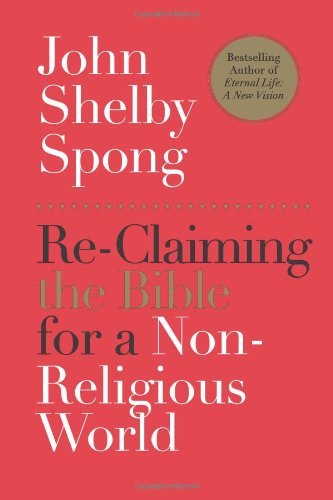
In Re-Claiming the Bible for a Non-Religious World, bishop and social activist John Shelby Spong argues that 200 years of biblical scholarship has been withheld from lay Christians. In this brilliant follow-up to Spong’s previous books Eternal Life and Jesus for the Non-Religious, Spong not only reveals the crucial truths that have long been kept hidden from the public eye, but also explores what the history of the Bible can teach us about reading its stories today and living our lives for tomorrow.
Sarah Sentilles, author of Breaking Up With God: A Love Story, applauds John Shelby Spong’s Reclaiming the Bible for a Non-Religious World, writing that “pulsing beneath his brilliant, thought-provoking, passionate book is this question: can Christianity survive the education of its believers?…A question Bishop Spong answers with a resounding yes.”
In Re-Claiming the Bible for a Non-Religious World, bishop and social activist John Shelby Spong argues that 200 years of biblical scholarship has been withheld from lay Christians. In this brilliant follow-up to Spong’s previous books Eternal Life and Jesus for the Non-Religious, Spong not only reveals the crucial truths that have long been kept hidden from the public eye, but also explores what the history of the Bible can teach us about reading its stories today and living our lives for tomorrow.
Sarah Sentilles, author of Breaking Up With God: A Love Story, applauds John Shelby Spong’s Reclaiming the Bible for a Non-Religious World, writing that “pulsing beneath his brilliant, thought-provoking, passionate book is this question: can Christianity survive the education of its believers?…A question Bishop Spong answers with a resounding yes.”
The Fourth Gospel: Tales of a Jewish Mystic: John Shelby Spong: 9780062011305: Amazon.com: Books
The Fourth Gospel: Tales of a Jewish Mystic: John Shelby Spong: 9780062011305: Amazon.com: Books

John Shelby Spong, bestselling author and popular proponent of a modern, scholarly and authentic Christianity, argues that this last gospel to be written was misinterpreted by the framers of the fourth-century creeds to be a literal account of the life of Jesus when in fact it is a literary, interpretive retelling of the events in Jesus' life through the medium of fictional characters, from Nicodemus and Lazarus to the "Beloved Disciple." The Fourth Gospel was designed first to place Jesus into the context of the Jewish scriptures, then to place him into the worship patterns of the synagogue and finally to allow him to be viewed through the lens of a popular form of first-century Jewish mysticism.
The result of this intriguing study is not only to recapture the original message of this gospel, but also to provide us today with a radical new dimension to the claim that in the humanity of Jesus the reality of God has been met and engaged.
John Shelby Spong, bestselling author and popular proponent of a modern, scholarly and authentic Christianity, argues that this last gospel to be written was misinterpreted by the framers of the fourth-century creeds to be a literal account of the life of Jesus when in fact it is a literary, interpretive retelling of the events in Jesus' life through the medium of fictional characters, from Nicodemus and Lazarus to the "Beloved Disciple." The Fourth Gospel was designed first to place Jesus into the context of the Jewish scriptures, then to place him into the worship patterns of the synagogue and finally to allow him to be viewed through the lens of a popular form of first-century Jewish mysticism.
The result of this intriguing study is not only to recapture the original message of this gospel, but also to provide us today with a radical new dimension to the claim that in the humanity of Jesus the reality of God has been met and engaged.
28.12.13
Why Are Religious People (Generally) Less Intelligent? | Psychology Today
Why Are Religious People (Generally) Less Intelligent? | Psychology Today
(2) Intelligent people are less likely to conform, and, in most societies, religiosity is closer to the norm than atheism is. Although this interpretation is based on extrapolation, it still makes sense: first, in most societies the number of religious people outnumbers the number of atheists or agnostics people; and second, higher-IQ people tend to be less gullible.
(3) Intelligence and religiosity are “functionally equivalent”, which means that they fulfil the same psychological role. Although this intriguing argument contradicts points 1 and 2, it deserves serious consideration. Humans will always crave meaning. Religion – like science and logical reasoning – provides them with a comprehensive framework or system to make meaningful interpretations of the world. At times, religion and science are in conflict; but they can also act in concert, complementing each other to answer non-falsifiable and falsifiable questions, respectively. The authors conclude that some people satisfy their desire to find meaning via religion, whereas others do so via logical, analytical, or scientific reasoning – and IQ predicts whether you are in the former or latter group.
It is noteworthy that these three explanations assume that IQ influences religiosity rather than vice-versa, which seems plausible: IQ levels remain very stable after childhood, whereas religiosity levels keep fluctuating – childhood IQ predicts adult IQ, but childhood religiosity is a very poor predictor of adult religiosity.
However, the authors forget to consider an important possibility, which is that the relationship between IQ and religiosity could be caused by a third variable, namely personality. Indeed, Openness to Experience, a personality dimension that predicts an individual’s propensity to display higher levels of intellectual curiosity, aesthetic sensitivity, and be driven by counter-conformist and rebellious attitudes, is positively correlated with IQ, and, like IQ, stable from an early age. Furthermore, there is also ample evidence suggesting that higher Openness may cause IQ gains in adulthood because open individuals are more likely to invest time and resources acquiring expertise and knowledge.
By the same token, it is feasible to expect open individuals to be less interested in religion. Their hungry mind makes them gravitate towards scientific or factual explanations, and artistic sensations, rather then religious dogma. This would be in line with the positive association between Openness and tolerance for ambiguity – open people can handle complexity and ambivalence – and the negative link between Openness and need for closure – open people are less likely to see the world in black-or-white terms and are generally more comfortable with uncertainty. Since religion tends to eliminate ambiguity and uncertainty, its “utility” or psychological benefits should be greater for less than more open people, which would explain why religion appeals more to less intelligent individuals – who are generally less open. But what do the data say?
Although there are no meta-analytic studies on the joint or interactive effects of Openness and IQ on religiosity, there are plenty of studies examining the relationship between personality and religiosity. The first large-scale review reported that Openness is negatively correlated with religious fundamentalism and formal religious adherence, albeit weakly. However, Openness was positively correlated with spirituality and “mature religiosity”, e.g., emotionality, quest for meaning, and community, without strict adherence to formal religion. In the same study, religiosity was negatively related to Psychoticism – a trait that captures an individual’s typical levels of self-control, law-abidingness, and empathy. To make matters more complex, Psychoticism and Openness are positively correlated, so the relationship between personality and religiosity may not be straightforward.
It also seems plausible that different elements or facets of Openness to Experience are differentially related to religiosity and spirituality. For example, a study found that people’s emotional appreciation of religion was negatively related to the more rational or intellectual aspects of Openness, but positively related to artistic imagination and aesthetic sensitivity, two other facets of Openness. Furthermore, non-linear relationships between Openness and attitudes towards religion can also be expected. In particular, individuals with higher Openness may be generally more reticent to embrace formal religious beliefs – but, on the other hand, people who are extremely open would be more able to understand and tolerate individuals who hold such beliefs, even if they don’t share them. In that sense, hardcore atheism and agnosticism are as symptomatic of rigidity and narrow-mindedness as extreme religiosity, and highlight an inability to understand alternative Weltanschauungen or opposite systems of values. In any event, associations between IQ and religiosity are at least in part determined by personality traits and values. And let's not forget that there are plenty of people who are both smart and religious - as well as many individuals who are agnostic and dim.
Understanding the negative relationship between IQ and religiosity
Catching up on my Xmas readings, I dived into the recent meta-analysis on the negative correlation between IQ and religious beliefs, which, at least in my case, makes sense: I am highly religious but not very intelligent… or is it the other way around? [Sorry, I’m not smart enough to figure it out].
The paper has very few methodological weaknesses, but as we know correlation does not mean causation – though correlations do have causes.
The key question, then, is why religious people are generally less intelligent. And the authors did not shy away from the answer, offering three compelling explanations:
(1) Intelligent people are generally more analytical and data-driven; formal religions are the antithesis: they are empirically fluffy and their claims are often in direct contradiction with scientific evidence, unless they are interpreted metaphorically – but maybe intelligent people are not that keen on metaphor. Another way of putting it is that people with a high IQ are more likely to have faith in science, which isn’t religion’s best friends (yes, yes, I do know about Einstein’s quotes).
The paper has very few methodological weaknesses, but as we know correlation does not mean causation – though correlations do have causes.
The key question, then, is why religious people are generally less intelligent. And the authors did not shy away from the answer, offering three compelling explanations:
(1) Intelligent people are generally more analytical and data-driven; formal religions are the antithesis: they are empirically fluffy and their claims are often in direct contradiction with scientific evidence, unless they are interpreted metaphorically – but maybe intelligent people are not that keen on metaphor. Another way of putting it is that people with a high IQ are more likely to have faith in science, which isn’t religion’s best friends (yes, yes, I do know about Einstein’s quotes).
(3) Intelligence and religiosity are “functionally equivalent”, which means that they fulfil the same psychological role. Although this intriguing argument contradicts points 1 and 2, it deserves serious consideration. Humans will always crave meaning. Religion – like science and logical reasoning – provides them with a comprehensive framework or system to make meaningful interpretations of the world. At times, religion and science are in conflict; but they can also act in concert, complementing each other to answer non-falsifiable and falsifiable questions, respectively. The authors conclude that some people satisfy their desire to find meaning via religion, whereas others do so via logical, analytical, or scientific reasoning – and IQ predicts whether you are in the former or latter group.
It is noteworthy that these three explanations assume that IQ influences religiosity rather than vice-versa, which seems plausible: IQ levels remain very stable after childhood, whereas religiosity levels keep fluctuating – childhood IQ predicts adult IQ, but childhood religiosity is a very poor predictor of adult religiosity.
However, the authors forget to consider an important possibility, which is that the relationship between IQ and religiosity could be caused by a third variable, namely personality. Indeed, Openness to Experience, a personality dimension that predicts an individual’s propensity to display higher levels of intellectual curiosity, aesthetic sensitivity, and be driven by counter-conformist and rebellious attitudes, is positively correlated with IQ, and, like IQ, stable from an early age. Furthermore, there is also ample evidence suggesting that higher Openness may cause IQ gains in adulthood because open individuals are more likely to invest time and resources acquiring expertise and knowledge.
By the same token, it is feasible to expect open individuals to be less interested in religion. Their hungry mind makes them gravitate towards scientific or factual explanations, and artistic sensations, rather then religious dogma. This would be in line with the positive association between Openness and tolerance for ambiguity – open people can handle complexity and ambivalence – and the negative link between Openness and need for closure – open people are less likely to see the world in black-or-white terms and are generally more comfortable with uncertainty. Since religion tends to eliminate ambiguity and uncertainty, its “utility” or psychological benefits should be greater for less than more open people, which would explain why religion appeals more to less intelligent individuals – who are generally less open. But what do the data say?
Although there are no meta-analytic studies on the joint or interactive effects of Openness and IQ on religiosity, there are plenty of studies examining the relationship between personality and religiosity. The first large-scale review reported that Openness is negatively correlated with religious fundamentalism and formal religious adherence, albeit weakly. However, Openness was positively correlated with spirituality and “mature religiosity”, e.g., emotionality, quest for meaning, and community, without strict adherence to formal religion. In the same study, religiosity was negatively related to Psychoticism – a trait that captures an individual’s typical levels of self-control, law-abidingness, and empathy. To make matters more complex, Psychoticism and Openness are positively correlated, so the relationship between personality and religiosity may not be straightforward.
It also seems plausible that different elements or facets of Openness to Experience are differentially related to religiosity and spirituality. For example, a study found that people’s emotional appreciation of religion was negatively related to the more rational or intellectual aspects of Openness, but positively related to artistic imagination and aesthetic sensitivity, two other facets of Openness. Furthermore, non-linear relationships between Openness and attitudes towards religion can also be expected. In particular, individuals with higher Openness may be generally more reticent to embrace formal religious beliefs – but, on the other hand, people who are extremely open would be more able to understand and tolerate individuals who hold such beliefs, even if they don’t share them. In that sense, hardcore atheism and agnosticism are as symptomatic of rigidity and narrow-mindedness as extreme religiosity, and highlight an inability to understand alternative Weltanschauungen or opposite systems of values. In any event, associations between IQ and religiosity are at least in part determined by personality traits and values. And let's not forget that there are plenty of people who are both smart and religious - as well as many individuals who are agnostic and dim.
Find a Therapist
Search for a mental health professional near you.Find a Therapist
Search for a mental health professional near you.
11.10.13
Ancient Confession Found: 'We Invented Jesus Christ'
Ancient Confession Found: 'We Invented Jesus Christ'

 [Jesus Christ] may be the only fictional character in literature whose entire life story can be traced to other sources.
American Biblical scholar Joseph Atwill will be appearing before the British public for the first time in London on the 19th of October to present a controversial new discovery: ancient confessions recently uncovered now prove, according to Atwill, that the New Testament was written by first-century Roman aristocrats and that they fabricated the entire story of Jesus Christ. His presentation will be part of a one-day symposium entitled "Covert Messiah" at Conway Hall in Holborn (full details can be found at http://www.covertmessiah.com).
Although to many scholars his theory seems outlandish, and is sure to upset some believers, Atwill regards his evidence as conclusive and is confident its acceptance is only a matter of time. "I present my work with some ambivalence, as I do not want to directly cause Christians any harm," he acknowledges, "but this is important for our culture. Alert citizens need to know the truth about our past so we can understand how and why governments create false histories and false gods. They often do it to obtain a social order that is against the best interests of the common people."
Atwill asserts that Christianity did not really begin as a religion, but a sophisticated government project, a kind of propaganda exercise used to pacify the subjects of the Roman Empire. "Jewish sects in Palestine at the time, who were waiting for a prophesied warrior Messiah, were a constant source of violent insurrection during the first century," he explains. "When the Romans had exhausted conventional means of quashing rebellion, they switched to psychological warfare. They surmised that the way to stop the spread of zealous Jewish missionary activity was to create a competing belief system. That's when the 'peaceful' Messiah story was invented. Instead of inspiring warfare, this Messiah urged turn-the-other-cheek pacifism and encouraged Jews to 'give onto Caesar' and pay their taxes to Rome."
Was Jesus based on a real person from history? "The short answer is no," Atwill insists, "in fact he may be the only fictional character in literature whose entire life story can be traced to other sources. Once those sources are all laid bare, there's simply nothing left."
Atwill's most intriguing discovery came to him while he was studying "Wars of the Jews" by Josephus [the only surviving first-person historical account of first-century Judea] alongside the New Testament. "I started to notice a sequence of parallels between the two texts," he recounts. "Although it's been recognised by Christian scholars for centuries that the prophesies of Jesus appear to be fulfilled by what Josephus wrote about in the First Jewish-Roman war, I was seeing dozens more. What seems to have eluded many scholars is that the sequence of events and locations of Jesus ministry are more or less the same as the sequence of events and locations of the military campaign of [Emperor] Titus Flavius as described by Josephus. This is clear evidence of a deliberately constructed pattern. The biography of Jesus is actually constructed, tip to stern, on prior stories, but especially on the biography of a Roman Caesar."
How could this go unnoticed in the most scrutinised books of all time? "Many of the parallels are conceptual or poetic, so they aren't all immediately obvious. After all, the authors did not want the average believer to see what they were doing, but they did want the alert reader to see it. An educated Roman in the ruling class would probably have recognised the literary game being played." Atwill maintains he can demonstrate that "the Roman Caesars left us a kind of puzzle literature that was meant to be solved by future generations, and the solution to that puzzle is 'We invented Jesus Christ, and we're proud of it.'"
Is this the beginning of the end of Christianity? "Probably not," grants Atwill, "but what my work has done is give permission to many of those ready to leave the religion to make a clean break. We've got the evidence now to show exactly where the story of Jesus came from. Although Christianity can be a comfort to some, it can also be very damaging and repressive, an insidious form of mind control that has led to blind acceptance of serfdom, poverty, and war throughout history. To this day, especially in the United States, it is used to create support for war in the Middle East."
Atwill encourages skeptics to challenge him at Conway Hall, where after the presentations there is likely to be a lively Q&A session. Joining Mr.Atwill will be fellow scholar Kenneth Humphreys, author of the book "Jesus Never Existed."
Further information can be found at http://www.covertmessiah.com.
About Joseph Atwill: Joseph Atwill is the author of the best-selling book "Caesar's Messiah" and its upcoming sequel "The Single Strand."
Biblical scholars will be appearing at the 'Covert Messiah' Conference at Conway Hall in London on the 19th of October to present this controversial discovery to the British public.


 [Jesus Christ] may be the only fictional character in literature whose entire life story can be traced to other sources.
 London (PRWEB UK) 8 October 2013
Although to many scholars his theory seems outlandish, and is sure to upset some believers, Atwill regards his evidence as conclusive and is confident its acceptance is only a matter of time. "I present my work with some ambivalence, as I do not want to directly cause Christians any harm," he acknowledges, "but this is important for our culture. Alert citizens need to know the truth about our past so we can understand how and why governments create false histories and false gods. They often do it to obtain a social order that is against the best interests of the common people."
Atwill asserts that Christianity did not really begin as a religion, but a sophisticated government project, a kind of propaganda exercise used to pacify the subjects of the Roman Empire. "Jewish sects in Palestine at the time, who were waiting for a prophesied warrior Messiah, were a constant source of violent insurrection during the first century," he explains. "When the Romans had exhausted conventional means of quashing rebellion, they switched to psychological warfare. They surmised that the way to stop the spread of zealous Jewish missionary activity was to create a competing belief system. That's when the 'peaceful' Messiah story was invented. Instead of inspiring warfare, this Messiah urged turn-the-other-cheek pacifism and encouraged Jews to 'give onto Caesar' and pay their taxes to Rome."
Was Jesus based on a real person from history? "The short answer is no," Atwill insists, "in fact he may be the only fictional character in literature whose entire life story can be traced to other sources. Once those sources are all laid bare, there's simply nothing left."
Atwill's most intriguing discovery came to him while he was studying "Wars of the Jews" by Josephus [the only surviving first-person historical account of first-century Judea] alongside the New Testament. "I started to notice a sequence of parallels between the two texts," he recounts. "Although it's been recognised by Christian scholars for centuries that the prophesies of Jesus appear to be fulfilled by what Josephus wrote about in the First Jewish-Roman war, I was seeing dozens more. What seems to have eluded many scholars is that the sequence of events and locations of Jesus ministry are more or less the same as the sequence of events and locations of the military campaign of [Emperor] Titus Flavius as described by Josephus. This is clear evidence of a deliberately constructed pattern. The biography of Jesus is actually constructed, tip to stern, on prior stories, but especially on the biography of a Roman Caesar."
How could this go unnoticed in the most scrutinised books of all time? "Many of the parallels are conceptual or poetic, so they aren't all immediately obvious. After all, the authors did not want the average believer to see what they were doing, but they did want the alert reader to see it. An educated Roman in the ruling class would probably have recognised the literary game being played." Atwill maintains he can demonstrate that "the Roman Caesars left us a kind of puzzle literature that was meant to be solved by future generations, and the solution to that puzzle is 'We invented Jesus Christ, and we're proud of it.'"
Is this the beginning of the end of Christianity? "Probably not," grants Atwill, "but what my work has done is give permission to many of those ready to leave the religion to make a clean break. We've got the evidence now to show exactly where the story of Jesus came from. Although Christianity can be a comfort to some, it can also be very damaging and repressive, an insidious form of mind control that has led to blind acceptance of serfdom, poverty, and war throughout history. To this day, especially in the United States, it is used to create support for war in the Middle East."
Atwill encourages skeptics to challenge him at Conway Hall, where after the presentations there is likely to be a lively Q&A session. Joining Mr.Atwill will be fellow scholar Kenneth Humphreys, author of the book "Jesus Never Existed."
Further information can be found at http://www.covertmessiah.com.
About Joseph Atwill: Joseph Atwill is the author of the best-selling book "Caesar's Messiah" and its upcoming sequel "The Single Strand."


Subscribe to:
Posts (Atom)